How Can IoT Smart Circuit Breakers Reconstruct a New Ecosystem for Power Safety?
Publish Time: 2025-12-09
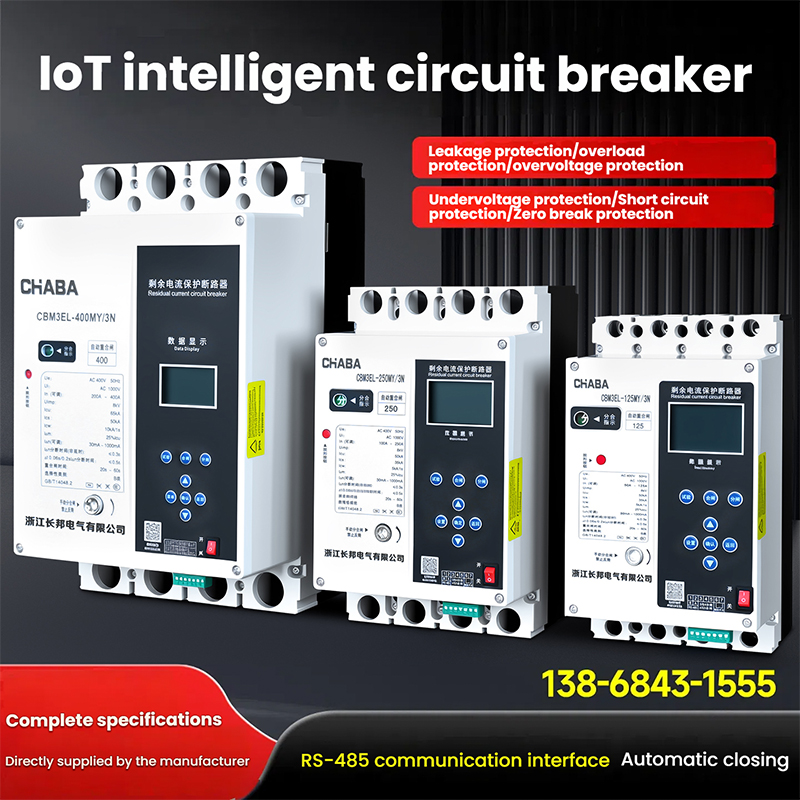
In today's global digital revolution, traditional power systems are undergoing a profound intelligent transformation. As the most fundamental and critical protection component in power distribution systems, circuit breakers have evolved from simple "overload/short-circuit switches" into intelligent terminals integrating sensing, analysis, communication, and control. The deep integration of Internet of Things (IoT) technology enables IoT smart circuit breakers to not only possess more precise and faster protection capabilities but also proactively participate in energy management, fault early warning, and remote operation and maintenance, thereby reconstructing a new ecosystem for power safety centered on "prevention first, intelligent response, and efficient collaboration."
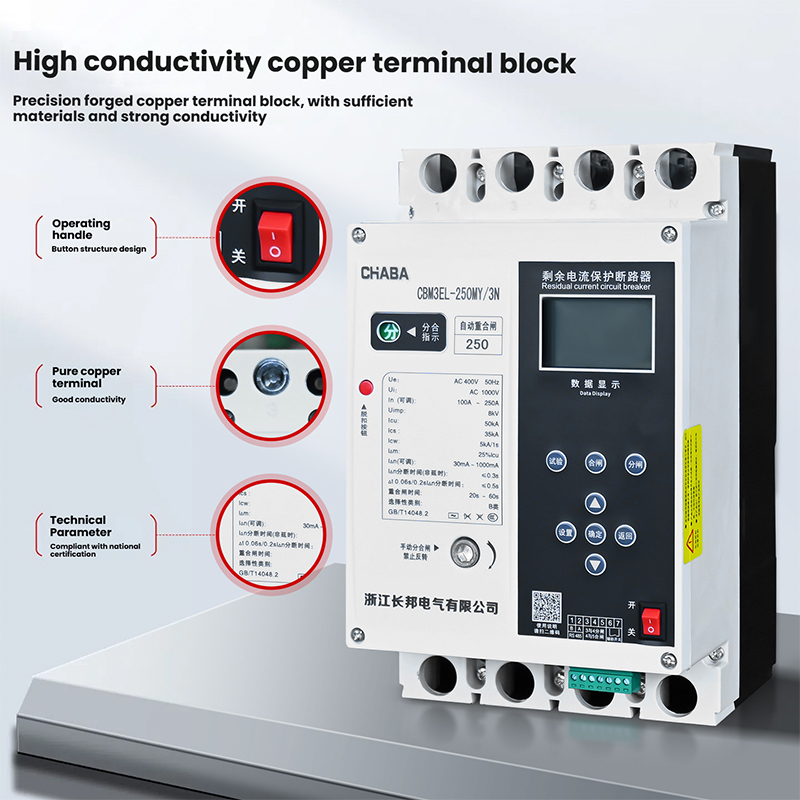
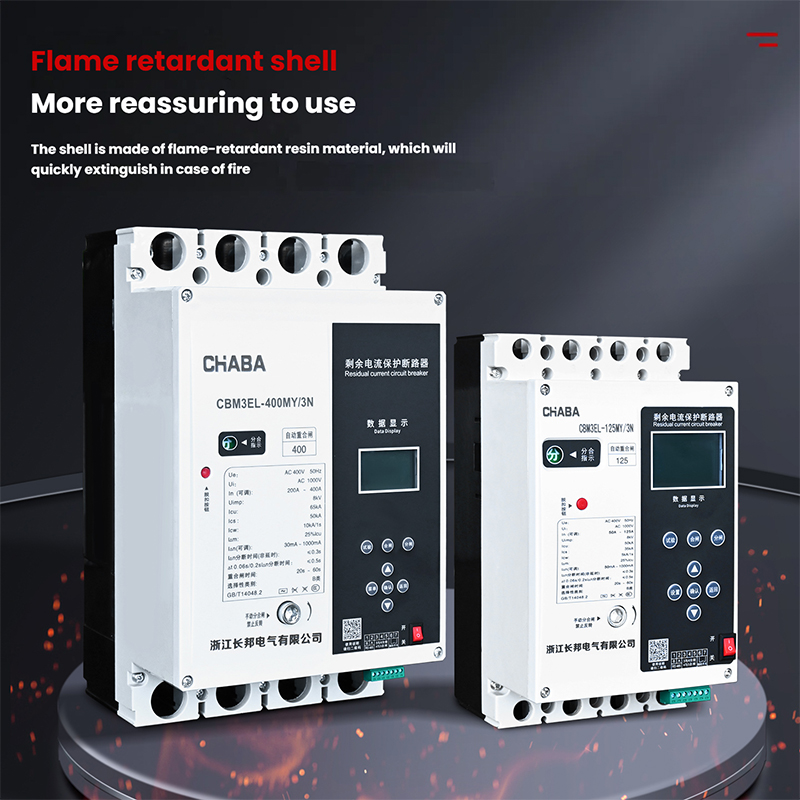
1. Smart Chip Empowerment: From Passive Protection to Proactive SensingTraditional circuit breakers rely on mechanical tripping mechanisms, passively acting only after a fault occurs, resulting in delayed response, false tripping, or failure to trip. In contrast, IoT smart circuit breakers incorporate high-performance intelligent chips that can perform millisecond-level real-time sampling and analysis of electrical parameters such as current, voltage, power, and temperature. The chip possesses independent computing capabilities, accurately identifying abnormal operating conditions—such as arc faults, leakage current, three-phase imbalance, and harmonic overload—and issuing warnings or automatically cutting off power before danger occurs.More importantly, users can flexibly enable or disable specific protection functions according to actual scenarios. For example, high-sensitivity arc detection can be enabled in data centers, while overload and short-circuit protection can be emphasized in industrial workshops. This "on-demand configuration" flexibility enhances safety and avoids unnecessary tripping interference, truly achieving "precise protection and intelligent decision-making."2. High-Conductivity Copper Terminals: Solidifying the Physical Foundation for Safe OperationEven the most advanced algorithms require reliable hardware support. The IoT smart circuit breaker uses precision-forged high-conductivity copper terminals made of high-quality oxygen-free copper material, achieving a conductivity of over 98% IACS. Compared to ordinary alloy terminals, it has lower resistance and less temperature rise, maintaining stable connection even under long-term high-current loads, effectively preventing localized overheating, arcing, or even fires caused by poor contact.Meanwhile, the terminal structure has been optimized to support multi-specification cable crimping, facilitating installation and maximizing contact area. This seemingly minor detail is a crucial element in ensuring the long-term safe operation of the entire power distribution circuit, embodying the design philosophy of "intelligence + reliability."3. Flame-retardant Housing Design: Building the Last Line of Fire ProtectionElectrical fires are often caused by short-circuit arcs or equipment overheating, spreading rapidly and being difficult to extinguish. Therefore, the housing of the intelligent circuit breaker uses high-grade flame-retardant resin material, which is not only resistant to combustion under high temperatures or arc impacts but also self-extinguishes flames within seconds, effectively preventing the fire from spreading along the distribution box.Furthermore, the material also possesses excellent weather resistance, aging resistance, and insulation properties, allowing for long-term use in complex environments such as humidity, dust, and corrosive gases. This "intrinsically safe" design provides the last physical line of defense for personnel and equipment, and is an indispensable part of building an inherently safe power system.4. Global IoT Collaboration: From Single-Point Protection to System-Level Security EcosystemThe core value of IoT smart circuit breakers lies not only in their upgraded functionality but also in their role as sensing nodes in the power IoT ecosystem. They can connect to cloud platforms or local edge controllers, enabling visualized and collaborative management of the entire system.In highway tunnels, hundreds of circuit breakers can report the status of lighting and ventilation circuits in real time. If a leakage occurs in a section, the system immediately locates and isolates the problem, while simultaneously pushing an alarm to the maintenance app. In subway stations, smart circuit breakers work in conjunction with the Building Automation System (BAS) to automatically adjust the power supply strategies for air conditioning and escalators based on peak passenger flow. On large gantry cranes in ports, circuit breakers monitor the motor starting current curve to predict mechanical faults such as bearing wear or belt loosening.This integrated "end-edge-cloud" architecture transforms previously isolated protection devices into the nerve endings of power safety, driving power safety management from "post-incident handling" to a closed-loop system encompassing "prevention, intervention, and traceability" throughout the entire lifecycle.5. Wide Range of Applicable Scenarios: Empowering Security Upgrades Across IndustriesWith its high reliability, strong adaptability, and intelligent interconnectivity, the IoT smart circuit breaker has been widely applied to various critical infrastructures:Highways: Ensuring uninterrupted power supply for tunnel lighting, monitoring, and toll collection systems;Subways and Rail Transit: Ensuring high availability of signaling, communication, and emergency power systems;Factory Workshops: Achieving refined power management and rapid fault isolation for production line equipment;Port Terminals: Supporting the safe operation of shore power systems and large loading and unloading equipment under high loads;Office Buildings: Enhancing the power supply resilience of critical loads such as fire protection, elevators, and data centers.In these scenarios, the smart circuit breaker is not just a "fuse," but also a "power health steward," continuously safeguarding the energy lifeline of modern society.The widespread adoption of the IoT smart circuit breaker signifies that power security is moving from "passive defense" to "active immunity." Through the deep integration of smart chips, high-quality materials, flame-retardant structures, and IoT capabilities, it not only improves the accuracy and speed of single-point protection but also builds a new power security ecosystem that is perceptible, analyzable, and interconnected.