In industrial power distribution systems, molded case circuit breakers, as critical overload and short-circuit protection devices, directly affect electrical safety and the continuous operation of equipment. Especially in heavy-load applications such as highway electromechanical systems, subway traction power supply, large port loading and unloading equipment, and high-power factory production lines, circuit breakers withstand continuous currents of hundreds or even thousands of amperes for extended periods. The conductivity and thermal stability of the terminals become the core factors determining their ability to operate "coolly." Molded case circuit breakers, through synergistic optimization of materials, processes, and structure, significantly improve current-carrying capacity and temperature rise control, effectively solving the overheating hazard under heavy loads and providing a solid guarantee for high-reliability power distribution.
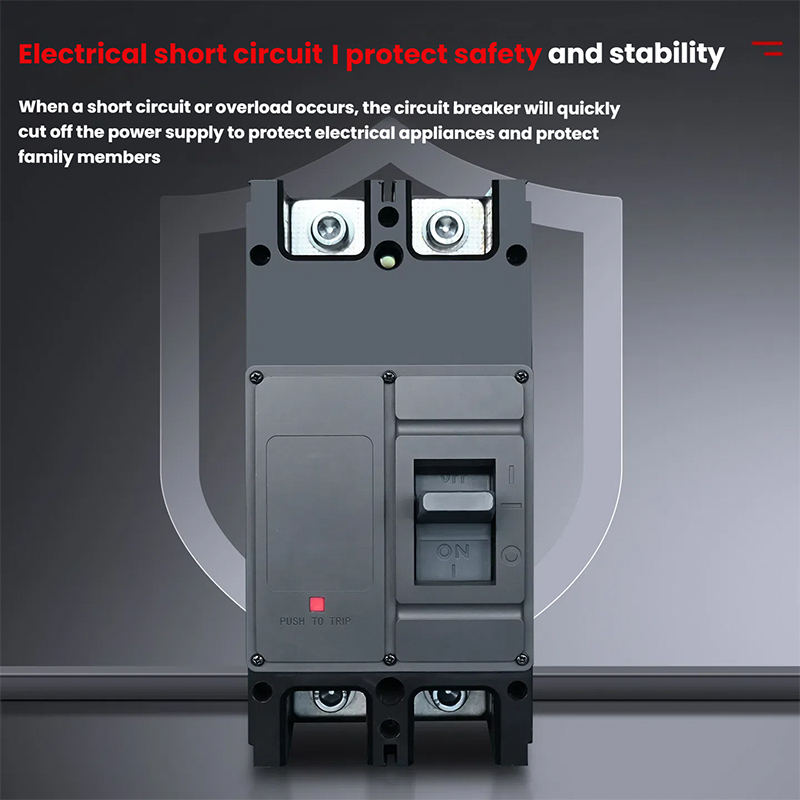
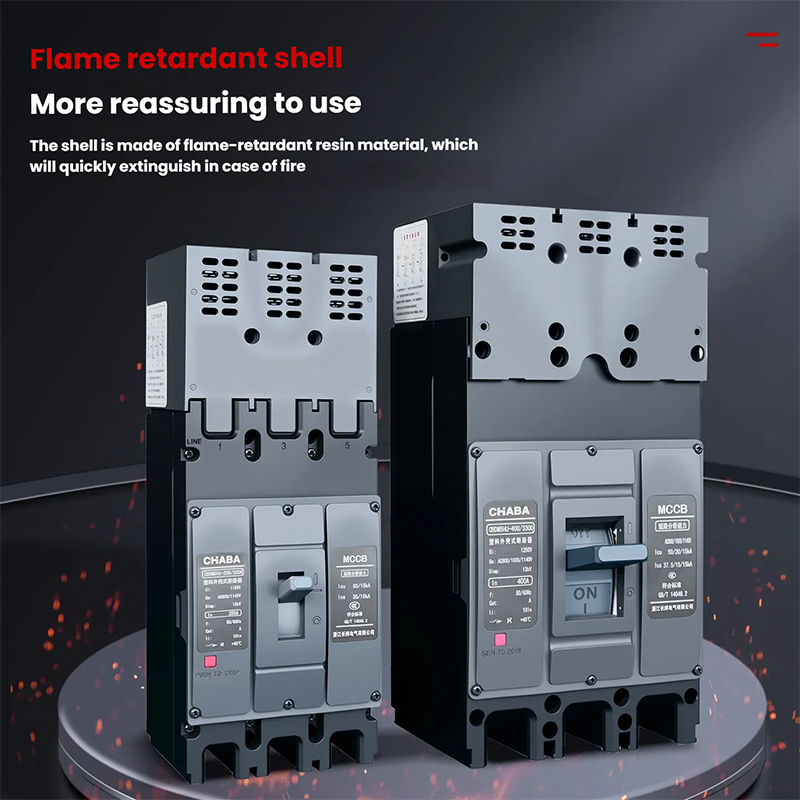
1. The thermal bottleneck of traditional terminals: Why do they easily "overheat" under heavy loads?Traditional molded case circuit breakers mostly use cast copper alloys or ordinary rolled copper busbars as terminals. While these materials possess basic conductivity, internal metallurgical defects such as porosity, shrinkage, and coarse grains result in lower actual conductivity. Under high current flow, according to Joule's law, even minute contact resistance generates significant heat. More seriously, the cast structure is prone to creep at high temperatures, leading to a decrease in bolt clamping force, further increasing contact resistance, creating a vicious cycle of "heating—loosening—heating even more."2. High-purity copper + precision forging: Improving conductivity and density from the sourceMolded case circuit breakers commonly use T2 or TU1 grade high-purity electrolytic copper as the terminal base material and employ a closed-die forging process. Unlike casting or simple stamping, precision forging, under high temperature and pressure, causes the metal grains to flow directionally along the direction of force, completely eliminating internal porosity and segregation, forming a dense, fine, and fibrous microstructure. This structure not only increases the material density to near the theoretical value but also maintains a stable conductivity of 101%–103% IACS, significantly reducing bulk resistivity. Meanwhile, the work hardening effect generated during forging enables the terminals to maintain high conductivity while possessing higher tensile strength and creep resistance, ensuring constant pressure at the bolt connection interface and consistently low contact resistance in the milliohm range under long-term thermo-mechanical coupling.3. Optimized Contact Interface Design: The Key to Reducing Contact ResistanceEven with excellent conductivity, an improperly designed contact surface can still become a heat source. High-conductivity precision forged copper terminals incorporate several structural optimizations:Large Contact Area Design: The terminal crimping surface adopts a widened and thickened structure, coupled with a dedicated torque screw, ensuring a full fit with the cable terminal;Surface Micro-treatment Technology: The contact area is treated with tin or silver plating, preventing oxidation and using soft metal to fill microscopic irregularities, increasing the actual contact area;Uniform Stress Distribution: Finite element simulation is used to optimize the screw hole position and rib layout, avoiding micro-deformation caused by localized stress concentration.Actual measurement data shows that under a rated current of 630A, the temperature rise of the circuit breaker terminals using this type of terminal is only 45K, far below the 60K limit specified in the national standard GB 14048.2, providing ample safety margin for the system.4. Synergistic Heat Dissipation with Flame-Retardant Housing: Building a Complete Thermal Management ChainHigh-conductivity terminals do not function in isolation, but are deeply coupled with the overall thermal design of the circuit breaker. Their housings are made of high-performance flame-retardant engineering resin, possessing not only excellent electrical insulation and self-extinguishing properties, but also good thermal conductivity. Some high-end products even integrate heat-conducting channels or metal inserts on the back of the terminals, quickly conducting the heat generated by the terminals to the housing surface, where it is dissipated through natural convection or forced air cooling. This combination of "low heat source + efficient heat dissipation path" ensures a uniform internal temperature distribution under heavy load conditions, avoiding the accumulation of local hot spots and ensuring that the tripping mechanism's operating characteristics are not affected by temperature drift.
High-conductivity precision forged copper terminals are the "cool core" of molded case circuit breakers in meeting heavy load challenges. Through the deep integration of high-purity materials, advanced forming processes, and system-level thermal management, it fundamentally suppresses the generation and accumulation of Joule heat, enabling the circuit breaker to maintain low heat, low resistance, and high reliability even under extreme operating conditions. In today's world of increasingly stringent energy efficiency and safety standards, this seemingly minor component innovation is quietly supporting the robust operation of modern industrial power distribution systems.